
THE RISE OF OUTDOOR WINTER SPORTS IN CHINA
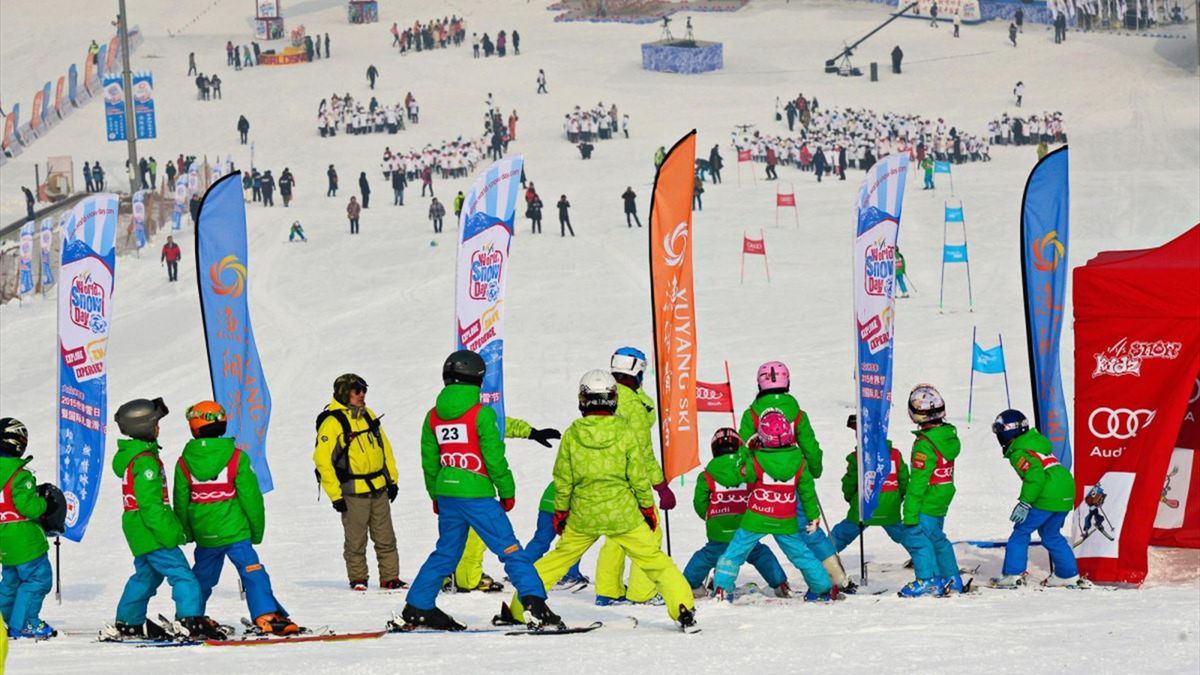
Over the last two decades outdoor winter sports have taken off in China, and the trend really surged in 2021-2022, when China hosted the Winter Olympics. It was the Olympics, in fact, that boosted interest in skiing and snowboarding among the Chinese.
The rush to winter sports has also led to growth in the construction of ski facilities and related resorts: in 2002 China had only 130 ski lifts, while ten years later it had around 800, a figure that does not include “dry slopes” and “indoor skiing spaces”, successful alternatives in areas without snow during the year.
The data are clear: China could become the world’s largest winter sports market, with participation expected to reach 50 million people by 2025 and more than 1,000 ski resorts opening by 2030, all thanks to the state investment made for the Olympics.
Although the data are more than promising, it is still too early for firm predictions. The ski market is very young and full of beginners who have only recently taken up the sport, so it remains to be seen whether these newcomers will turn skiing into a real passion or leave the slopes.
Most Chinese skiers are aged between 20 and 30 and come from the most populous areas of the east coast, regions that are not at all suited to winter sports and do little to encourage them, so this segment of tourism is still largely untested.
Enthusiasm for the 2022 Winter Olympics also had a strong influence on the winter clothing market. In 2021 this market generated 725 million dollars in revenue, but its potential has not been exploited by foreign brands, which continue to favour markets outside China.
China’s ski areas can be divided into three macro-zones: the Beijing area, the Dongbei area and the Xinjiang area.
The advantage of the Beijing area is that it is well served by transport, the resorts are easily accessible, and there are many restaurants, spas and good hotels, making it an attractive destination, especially for beginners and families. However, the area does not get heavy snowfall in winter, so resorts often have to rely on artificial snow. The Dongbei area, on the other hand, has frequent, heavy snowfall, but temperatures can be far too harsh for many people, reaching -30° in winter. Restaurant and hotel services are not excellent, and many visitors choose not to stay there. Xinjiang offers a perfect combination of facilities and temperatures suited to winter sports and more, with many trails set up for snow trekking.
Although the number of ski resorts in China has grown over the last two decades, their overall quality is still mid-to-low range, and the high cost of upmarket resorts has pushed occasional Chinese skiers to look for alternatives. Indoor skiing has grown in popularity in big cities, especially among women, and other high-tech alternatives have also begun to develop. Led by companies such as Skinow and SkyTechSport, these technologies have had to meet growing demand in China from both amateurs and professionals. Solutions have been devised for skiing all year round despite China’s warm climate: “dry slopes”. These synthetic ski slopes are a recent trend in China: the first appeared in 2012 and there are now around 45, with 342,300 visitors in 2019. They can be found all over China, but especially in Beijing and Sichuan.
The ski market is still at an early stage in China; the foundations are promising and the public is embracing it with great enthusiasm. KOLs themselves promote these outdoor activities on the main social networks, sharing exciting moments at the country’s top ski resorts. The euphoria for the sector brought by the Olympics will certainly play its part; it remains to be seen whether the popularity of the last two years will last, turning China into the world’s largest ski market, or fade within a few months. China is always on the move, and knowing the right move to make in this sector could be a real game-changer for foreign brands.
>> READ ALSO: THE SUCCESS OF GLAMPING IN CHINA (in Italian)